
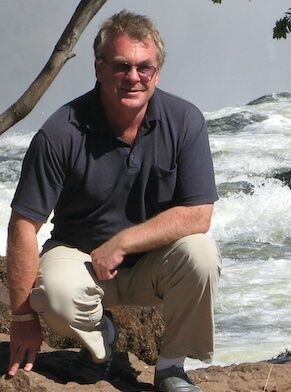
My name is Paul Neazor and I was asked by Kent Currie to help prepare information for the Chiefs and Chiefs Manawa alumni project he has been driving. Since I thought it was a valuable project, I was more than happy to get involved. Having completed all that was requested, I now think it’s a first-class initiative and am pleased to have played a small part in making it happen.
As a recorder of the deeds of others, I was happy to remain behind the scenes but Kent had other ideas. This is only being written at his insistence and, since I am mindful of the possible threat he may write it himself and give me no editorial say over the content, here goes.
I’m originally from Wellington, and fell in love with rugby when I was about seven years old. I began playing, began reading about the game, collected (like almost everyone else I knew) the cards in bubble gum packs featuring the 1967 All Blacks to Britain, and looked forward to going to ‘the Park’, our local ground, and watching the club games every weekend.
At some stage in 1969 I discovered the Rugby Almanack and was fascinated by all the information it contained. I must have borrowed it from the library 10 times, learned heaps, made notes, wondered if there was more out there, and borrowed even more books from the library. Then I discovered books and stories about the old All Black teams, and I was away. That fascination with rugby history has never left me.
I collected the tour magazines that used to be put out by the papers and then Rugby News, started building a collection of Rugby Almanacks (for more than 50 years I’ve always added the new one as soon as it came out), started picking up books at fairs and various sales (you could always stretch a dollar further there), and I had the chance to occasionally greet our plumber, Paul Delaney – who played 92 games for Wellington, seven for the Bs and one odd one to raise his ton, after being part of the sides that hammered the 1965 Boks and 1966 Lions – Grant Batty, who lived at the end of my paper run, and the handful of rep players at our club on those cherished occasions I was a ballboy.
I even once asked Arthur Carman if he needed a hand preparing the Almanack, which I would have done for nothing, but he preferred to carry on by himself.
I moved to Auckland in 1984 and within weeks a nasty injury had ended my playing days, but through rugby and cricket I met several real enthusiasts and the doors they helped open have led to a lifetime of being involved in both games. I started stringing for the New Zealand Herald in the late 1980s (a great time to be involved in Auckland rugby), became a first-class cricket scorer under the generous tutelage of the best this country has ever produced, a chap named Mark Kerly, and started working on projects covering Auckland club rugby.
In 1991 Rod Chester and Neville McMillan started the Association of Rugby Historians and Statisticians, and I became a charter member of that. It’s still going strong, with a world-wide membership of more than 70 these days, and the information sharing is always useful. Cricket in particular led to greater contact with the media and in 1995 Don Cameron passed on a project which
he couldn’t do due to other commitments, a centenary history of the College Rifles club. The club was okay with me writing it, and the end product was the beginning of what I do now.
Soon afterwards Sky TV picked me up to act as their cricket scorer, and in early 1999 I was asked the question I had been waiting for – ‘Are you interested in rugby at all?’
Does the wind blow through Cook Strait?
Kevin Cameron, then the Head of Sport, believed me when I said I could build the best database in all of world rugby TV coverage, challenged me to prove it and, with Paul Aitkin and Stu Woolford (a pair of computer whizzes) and Mark Coldwell, a TV graphics expert, we had the facts and delivery system in place by the time NPC started. And yes, it was light years ahead of anything else out there.
For nearly 20 years I was the facts and information guy for Sky, preparing notes on a variety of subjects each week, being the clearing house for information, checking anything one of the commentators might ask for and doing plenty of in-game stat recording as one of the smallish crew at a match. If any milestone or oddity came up during the game I could talk to the commentators (always picking my moment, of course) and they could put it out there.
I worked with a lot of absolute diamonds and had a lot of fun along the way.
During the summers I covered cricket as the TV scorer, was involved with the graphic output again, and in time got involved with Sir Ian Taylor’s Animation Research Ltd. Ian’s companies were cutting edge and did ball-tracking for the Decision Review System; he had jobs worldwide and a career highlight was three years working for Channel 9 in Australia when all the big guns were still there. It was, at the time, the most sought-after cricket gig in the world.
I left TV in 2016 and returned to Ponsonby Rugby Club’s list, as I had long promised myself I would build their history into an e-museum. There was so much to do, but electronic search engines had simplified research from the days in the 1990s when I was doing the 125th Jubilee book, Passion and Pride, and had to go to the library every weekend to dig into bygone newspaper files.
After years of plugging away, most of the gaps have now been filled. We’ve had, for example, our Double Centurions blazer lunch, at which the seven were presented with a ‘200’ blazer. Records had not been well kept, but we had finally got the information and it was, at times, a very emotional day. There are two events in the pipeline to present blazers to Centurions, now we know who they are, and Life Members. The buy-in from older club members has been phenomenal.
As well as the papers and TV stuff, I’ve done six rugby books here and in Australia, mostly historical but a couple I’ve done for my own enjoyment. A mate told me one was: ‘The best toilet book ever written’, which I took as a complement since I knew exactly what he meant - the stories were good and the chapters just the right length. I’ll keep that one for the tombstone.
All of the above might help explain why I was so keen to get involved with this Chiefs project. The club was preserving its history in a way which would also make it available to everyone who might
be interested, and respecting what has passed as well as anticipating the future. The important things are stressed. As at Ponsonby, my club throughout my Auckland days, that respect is real and it is held close to the heart of so many. It matters to the people who were part of it, in whatever capacity that might have been.
Ever since 1969, when I first laid eyes on a Rugby Almanack, recording the game has been a passion. Eventually I earned my daily bread that way. I’m so pleased it is a passion at the Chiefs as well, because too many organisations don’t treat their heritage as I feel they should. I’ve been honoured to have played a small part in preserving it for the Chiefs and Chiefs Manawa.